


Modular gantry
Large-format mechanical architecture designed around an industrial operating envelope.
Large-format construction automation
Low-carbon cement technology
A gantry platform for large-format concrete extrusion, with a 21 × 15 × 9 m working envelope. Over 100 full-scale prints completed. Built to order from Bulgaria.
The platform
Mechanical gantry architecture, controlled material delivery, extrusion and digital motion control are integrated into one modular production platform.
Large-format mechanical architecture designed around an industrial operating envelope.
Preparation, delivery and controlled extrusion for locally adapted cement-based mixes.
CNC-based motion, proprietary software and toolpath execution across the build area.
Safety, commissioning, operator training and technical support built into deployment.
Operating parameters
Figures below are from full-scale printing. Final commissioning values are confirmed per machine and per material.
* Performance depends on material behaviour, geometry, curing conditions and operating procedures and is subject to pilot validation.
Commercial configuration
Each platform is configured around the required working envelope, material system, automation level, site conditions and commissioning scope.
Request a tailored quotationTechnology workflow
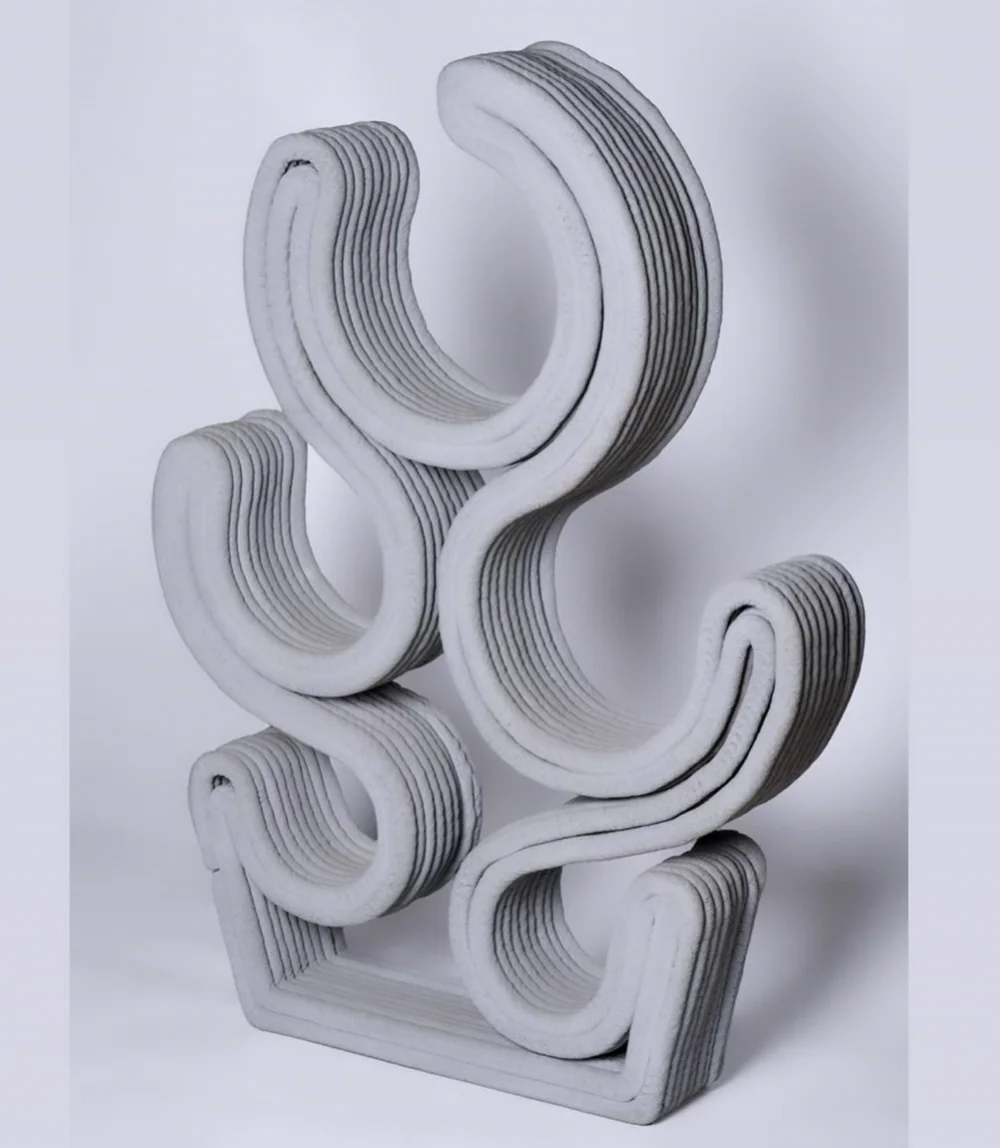
Bespoke forms for architecture, public spaces and landscape projects.
First delivered project
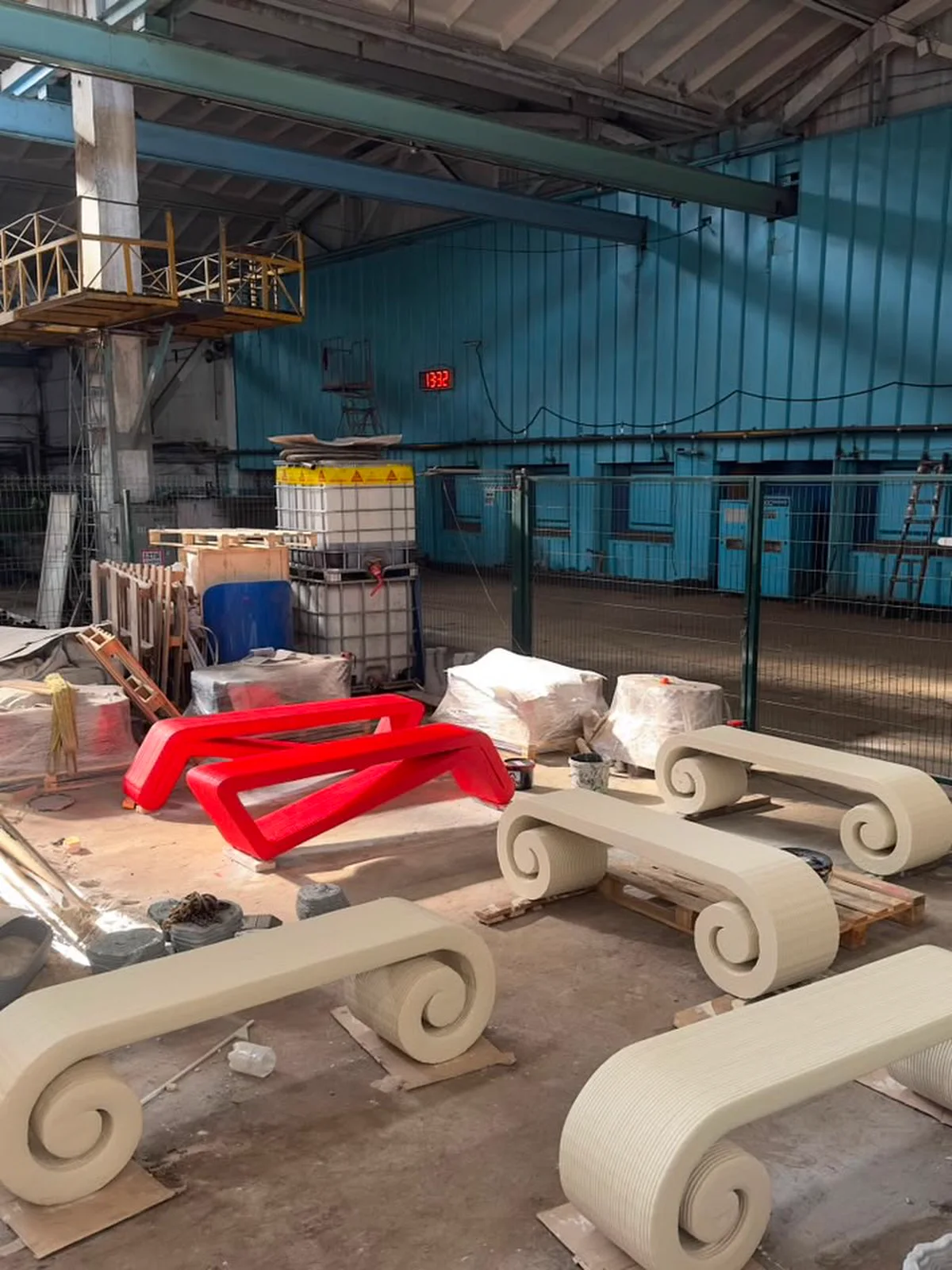
For the Japanese setting we produced decorative characters and a red bench. For the Greek one, white benches with expressive flowing forms. The design and colour of each object are adapted to its surroundings.
The platform connects software, machine motion and cement-based material processing in one repeatable workflow.
Application geometry is prepared for large-format additive production.
Machine paths and process parameters are translated into CNC-based control.
Cement-based mixes are adapted with material partners for the target application.
Material is placed continuously within the platform working envelope.
Engineering evidence
Applications
Applications are developed and validated with material producers, manufacturers, contractors and research partners.
Full-scale construction
Digital production supports curved geometry, controlled material placement and reduced dependence on conventional formwork.
Repeatable walls, panels, forms and custom cement-based elements.
Controlled testing for printable conventional and lower-carbon formulations.
Application-specific geometries for qualified industrial pilot programmes.
Complex, curved and customised elements generated from digital toolpaths.
Cement decarbonization
AddLine's platform doubles as an industrial validation tool for lower-carbon cement-based formulations, supporting material producers who need repeatable, measured process data before commercial adoption.
Assess pumpability, extrusion behaviour and buildability under controlled operating conditions.
Generate repeatable production evidence across material delivery, toolpaths and layer formation.
Support material producers with measured validation before industrial pilots and commercial adoption.
Low-carbon construction materials
A mineral, breathable and cost-efficient wall-core concept for 3D-printed construction.
AddLine is developing a 3D printed wall system approach that combines a printed cement-based outer shell with lightweight mineral foam-concrete infill.
This approach is intended to reduce wall-package cost, lower structural weight, reduce dependency on multi-stage manual wall construction and simplify the construction sequence compared with traditional ceramic block, insulation, plasterboard, plastering and finishing layers.
The wall concept is based on mineral cement-based materials and is intended to support breathable, vapour-permeable wall structures with natural moisture exchange and a comfortable indoor environment.
Performance characteristics such as compressive strength, thermal behaviour, moisture behaviour, durability and regulatory compliance are intended to be validated through planned EU-based demonstration activities, pilot testing and external verification where required.
Construction automation
Traditional foam-concrete production is commonly organised in batch cycles, where material is prepared in portions before placement. Typical small-to-medium foam-concrete equipment often works with limited batch volumes, which can restrict continuity and productivity on larger wall applications.
AddLine is developing a continuous-feed approach designed to deliver lightweight mineral foam concrete directly into the printed wall system. The target production capacity is up to 6 m³/hour, subject to validation through pilot testing, material stability checks and external verification where required.
This continuous process is important because it supports industrial-scale wall production, reduces manual handling, improves process continuity and strengthens the overall economics of the 3D-printed wall system.
Material proof
Recent internal testing demonstrated an ultra-light mineral foam-concrete sample with a calculated density of approximately 175 kg/m³.
Validation note: this is an internal material test sample. Final construction-performance claims will require further testing, project-specific engineering and external verification where required.
Foam concrete produced using conventional batch-based methods generally starts at densities of approximately 300 kg/m³ and above.
AddLine has already produced and documented an ultra-light mineral foam-concrete test sample with a calculated density of approximately 175 kg/m³, as demonstrated in the accompanying video. This result confirms our ability to work within a significantly lower density range of approximately 150–200 kg/m³ for non-load-bearing wall-core infill.
At the same filled volume, a density of 150–200 kg/m³ means approximately 33–50% less wall-core material mass than foam concrete at 300 kg/m³. This substantial reduction in material use is a direct contribution to construction decarbonization: fewer raw materials are required, less material must be transported and handled, and the embodied-carbon burden of wall production can be reduced.
Material-efficient construction
A preliminary Burgas-based wall-package comparison indicates that the AddLine 3D printing scenario may significantly reduce wall-package cost and wall execution time compared with a traditional ceramic block / insulation / plasterboard / plastering / finishing sequence.
This is not a whole-building cost comparison. The 54.3% figure applies only to the wall package. Foundations, the load-bearing structural system, roofing, MEP systems, windows, doors and other conventional construction works are not included and may still be executed using conventional methods.
These figures are preliminary and based on a specific Burgas wall-package case. Results depend on project design, local material prices, labour costs, engineering requirements and validation data. Detailed assumptions, calculations and comparative tables are available separately for investors, industrial partners and pilot customers.
| Wall scenario | Wall-package cost | Est. execution |
|---|---|---|
| AddLine 3D printing wall scenario | EUR 8,829 | approx. 1 week |
| Traditional ceramic block wall scenario | EUR 19,333 | approx. 4–6 weeks |
| Wall-package difference | EUR 10,504 | approx. 54.3% lower wall-package budget |
Preliminary and case-specific. Walls only, Burgas wall-package case.
Indicative, to be validated. At whole-building level, the potential total cost reduction is estimated at approximately 25–30%, subject to project design, engineering requirements, local material prices, labour costs, validation data and external verification where required.
Supporting calculations are based on a preliminary comparison prepared for one house in Burgas and are available separately upon request.
Integrated industrial workflow
AddLine is not only developing a 3D concrete printer. The company is developing an integrated industrial workflow for cost-efficient cement-based wall production.
Instead of adding more labour, more layers and more manual operations, AddLine focuses on automated placement, lightweight mineral infill and fewer construction stages.
The advantage comes from the combination of:
Printing in motion
Production views from AddLine printing trials, showing large-format extrusion and continuous curved geometry.
Industrial delivery model
AddLine keeps system engineering, software, integration, final assembly and commissioning at the core of each platform deployment.
Working envelope, material workflow and customer application definition.
Qualified suppliers for standard structures and components, integrated under AddLine engineering control.
Mechanical, extrusion, control and safety systems assembled and tested together.
Operator onboarding, process guidance, maintenance planning and technical assistance.
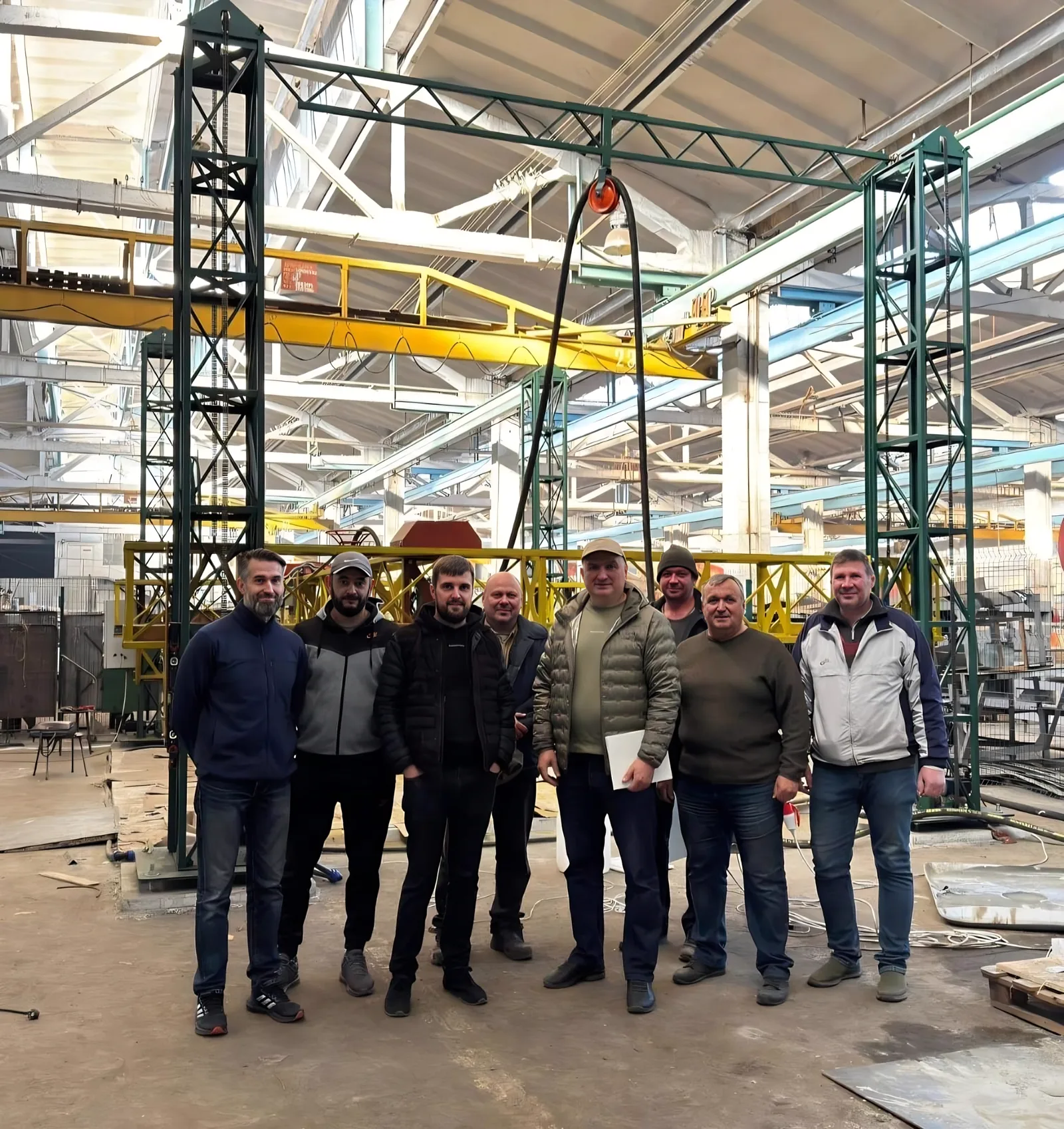
AddLine Technologies
AddLine combines construction engineering, machine design, CNC automation, software and cement-material process know-how. The technology was developed and proven in production before the company moved to Bulgaria. The first EU-built platform is now in preparation in Burgas.
From digital paths
to finished geometry.
Start a technical conversation
We work with contractors, precast manufacturers and material producers who want to bring large-format printing into their own production.
Add Line Technologies LTD